 JiaJiong Candle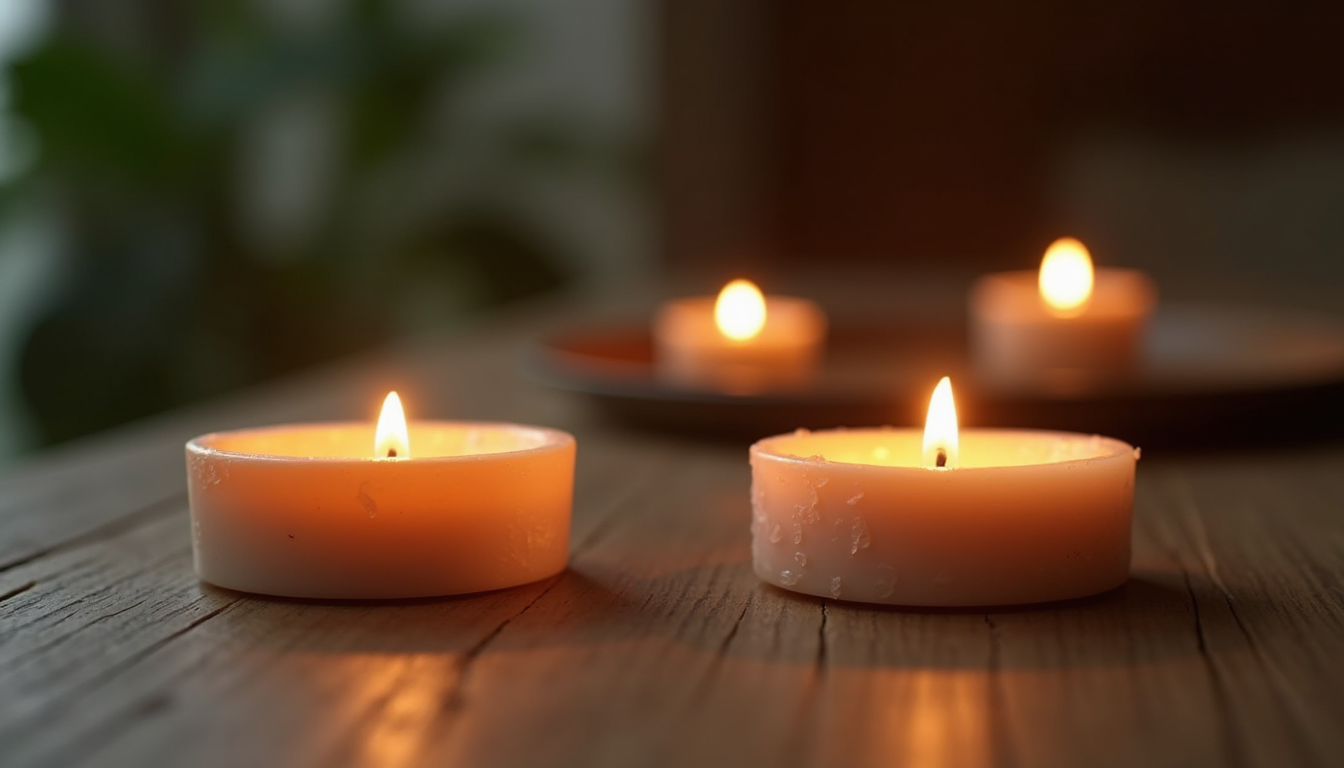
Traditional Tea Lights vs LED Tea Lights — What You Need to Know
قراءة 5 دقيقة
Wax tea lights or LED tea lights? A side-by-side comparison of safety, cost, environmental impact, ambiance and practical use, with guidance on which format suits which setting.
Tea lights have been the default way to add a soft glow to a room for a very long time: cheap, small, and effective out of all proportion to their size. LED tea lights now sit beside them on the same shelf, and for a lot of buyers the choice is no longer obvious. Understanding what actually differs — and what does not — makes it a straightforward decision rather than a guess.
How Traditional Tea Lights Work
Traditional tea lights are small candles, usually paraffin, soy or beeswax, held in a thin metal or plastic cup. The wick burns the wax and produces a real flame — and real heat.
Key Features of Traditional Tea Lights
- Real flame and warmth — the natural flicker and radiant warmth that nothing else quite reproduces.
- Scent options — many are fragranced, so the candle contributes smell as well as light.
- Limited burn time — typically three to five hours before the wax is spent.
- Disposable — once burned out, candle and cup are discarded.
They are used for ambiance, aromatherapy and in food warmers, and they remain the right answer wherever a genuine candlelight effect is the point.
How LED Tea Lights Work
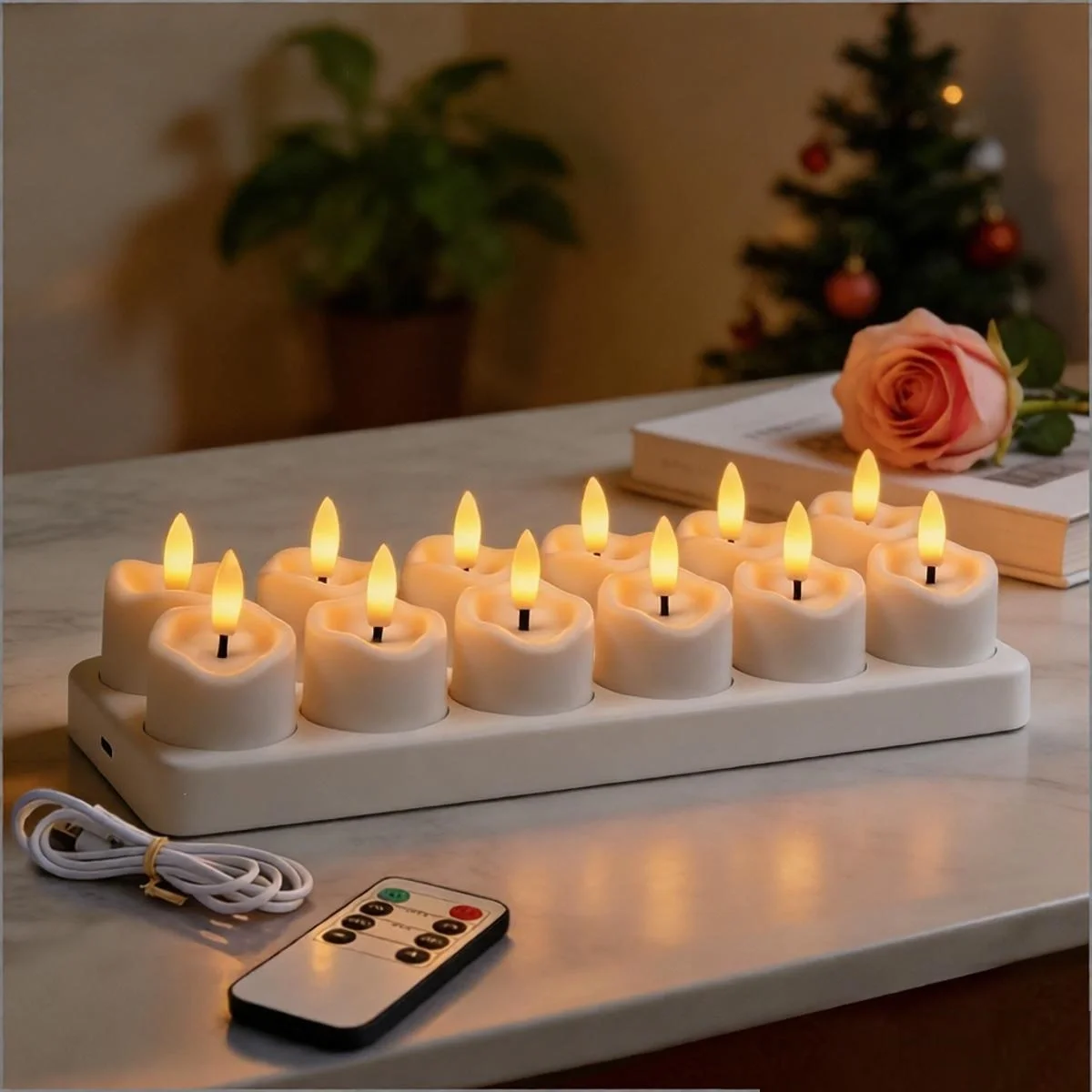
LED tea lights use a small light-emitting diode powered by a battery, usually with a flicker circuit that imitates the movement of a flame.
Key Features of LED Tea Lights
- No real flame — light without heat or ignition risk.
- Long-lasting — many hours per set of batteries, and rechargeable models remove the disposables entirely.
- Safe in restricted environments — usable where open flame is prohibited, and around pets and children.
- Reusable — the same units come out again next season.
They dominate decorative use wherever safety and convenience outweigh authenticity. The full LED tea light range covers the common formats, from plain white votives to glitter and glass finishes.
Differences in Safety
Safety is the single biggest difference between the two.
Traditional tea lights carry genuine fire risk. They can burn skin, ignite nearby material, and tip if the surface is not level or the cup is not stable.
LED tea lights remove the fire hazard entirely. They produce no heat, so they are safe around children and pets and inside enclosed props, lanterns and paper shades where a flame could not go.
This is why many event venues specify LED tea lights outright: in a crowded room with long tables and loose fabric, the risk calculation is not close. Where flame is permitted, our candle care and safety guidance covers safe placement and burn practice.
Environmental Impact
Traditional tea lights produce smoke and soot, and their metal or plastic cups usually go to landfill. Paraffin is a petroleum product, though soy and beeswax alternatives exist.
LED tea lights depend on batteries, which need proper disposal or recycling. Against that, they are reusable, which cuts total waste substantially compared with single-use candles. Choosing rechargeable models reduces the battery footprint further.
Cost Considerations
Traditional tea lights are inexpensive to buy and need continual replacement — roughly $10 to $15 for a pack of 100.
LED tea lights cost more up front, often $20 to $30 for a set of twelve, but last far longer. Batteries or recharging add a running cost that is still well below replacing wax.
For anything used repeatedly — a venue, a seasonal display, a rental inventory — LED works out cheaper over a season or two. For a one-off dinner, wax does not. Volume buyers can compare landed cost across both formats through our wholesale programme.
Ambiance and Aesthetic Differences
Traditional tea lights give a warm, natural glow with a flame that moves unpredictably. That unpredictability is most of the effect.
LED tea lights have improved considerably — warm-toned diodes and better flicker circuits get close — but at short viewing distance they can still read as imitation. Choose accordingly: the further away the candle and the darker the room, the less the difference shows.
For romantic dinners and meditation, wax is often still preferred. For casual, high-traffic or safety-constrained settings, LED is more than adequate.
Practical Uses and Examples
- Home decoration — wax on dining tables, fireplaces and patios; LED on shelves, in bathrooms and in children's rooms.
- Events — wax where atmosphere is paramount and permitted; LED wherever there are fire restrictions.
- Emergency lighting — LED tea lights double as a safe light source in a power cut.
- Crafts and DIY — both work in lanterns, centerpieces and holiday displays, with LED giving more freedom because heat is not a constraint.
Maintenance and Storage
Traditional tea lights need no maintenance but must be stored away from heat, or they deform.
LED tea lights need battery checks and occasional replacement, and should be stored dry to protect the electronics.
Summary of Main Differences
| Feature | Traditional tea lights | LED tea lights |
|---|---|---|
| Flame | Real flame | Simulated flicker |
| Heat | Produces heat | None |
| Safety | Fire risk | Fire-safe |
| Burn time | 3–5 hours | Many hours; rechargeable options |
| Environmental impact | Wax and metal waste | Battery disposal |
| Cost | Low initial, recurring | Higher initial, lower recurring |
| Ambiance | Warm, natural glow | Imitates candlelight |
| Reusability | Single use | Reusable |
Choosing Between Them
The decision follows from the setting, not from a general preference. Authentic candlelight and scent: traditional tea lights. Safety, longevity and convenience: LED.
Think about where and how they will be used. In a home with children or pets, LED removes a real hazard. For a single special occasion where atmosphere is the whole point, wax is worth the extra care. Many venues end up using both — wax on supervised tables, LED everywhere else.
If your setting rules out flame entirely, remote control LED candles for Halloween and themed decor covers how larger flameless installations are specified and operated. For events where fragrance matters as much as light, event decor scented candles works through the scent and styling side. If the question is which power option to buy in volume, rechargeable flameless candles vs battery operated LED candles sets the two side by side on unit price, runtime and the labour each one adds, and how to buy remote control battery operated LED candles covers what to confirm on remote range and timers.
For a deeper buying process covering material, runtime, timer and packaging, continue with the battery operated LED candle timer checklist.
- LED candles
- Tea lights
- Buying guide
تابع القراءة
قراءة 4 دقيقة
Flickering Rechargeable Flameless Candles: Bulk Buyers' Checklist
A practical checklist for bulk buyers comparing runtime, charging, recharge cycles, flicker consistency, storage and supplier QC for rechargeable flameless candles.
قراءة 4 دقيقة
LED Tea Lights vs LED Votive Candles for Commercial Decoration
Compare LED tea lights and LED votive candles for weddings, hotels, restaurants and wholesale projects by visual scale, holder fit, runtime and cost.
قراءة 8 دقيقة
Christmas LED Candles for Events: Buying and Decoration Guide
Choose Christmas LED candles for hotels, restaurants and events by format, runtime, control and weather exposure, then confirm the right details before a bulk order.