 JiaJiong Candle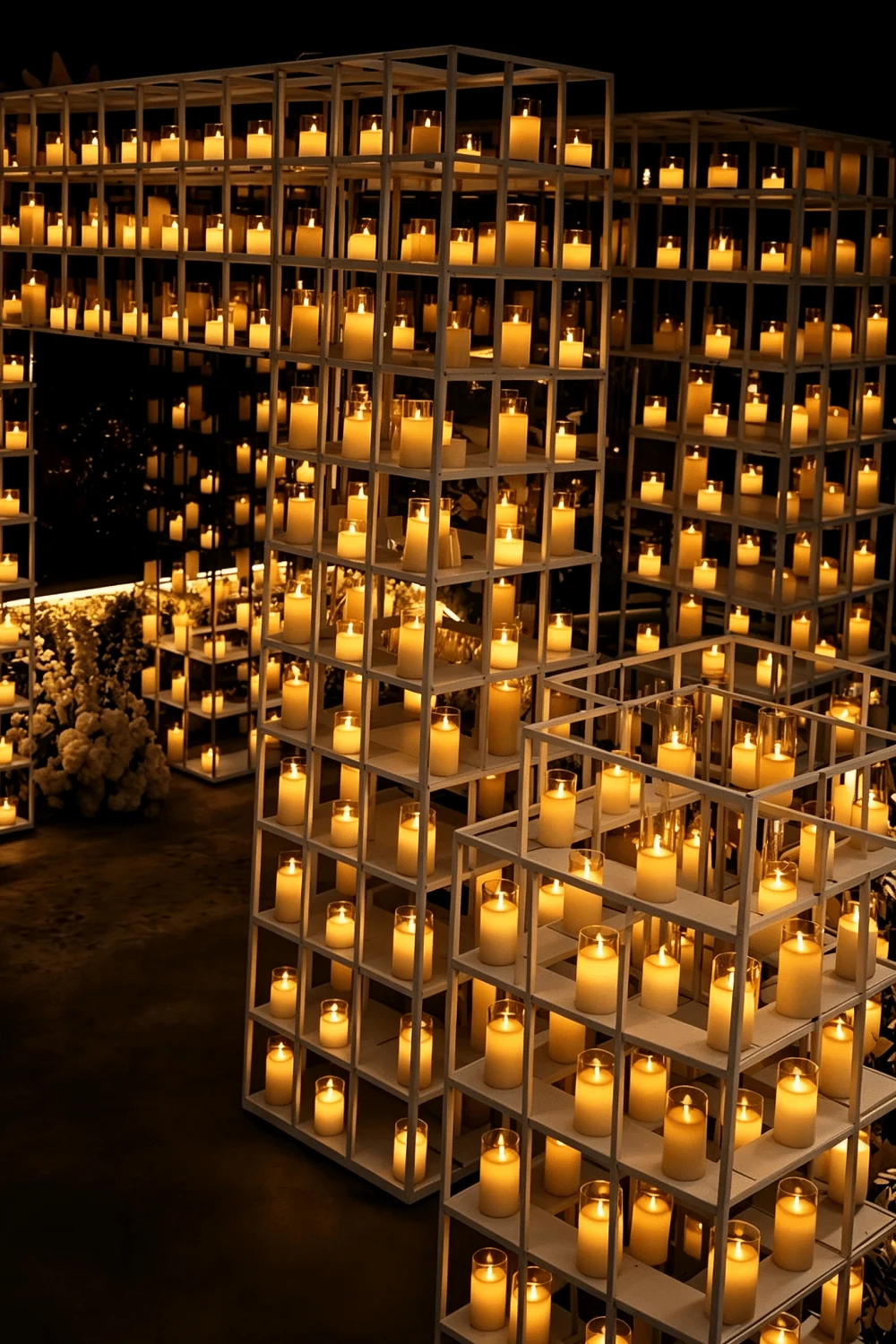
Rechargeable Flameless Candles vs Battery Operated LED Candles for Bulk Buyers
قراءة 9 دقيقة
Rechargeable flameless candles cost more per unit than battery operated LED candles and less to run. Which way that trade falls depends on how often your inventory goes back out.
Both formats give you a flameless candle, and at guest distance nobody can tell which one they are looking at. The difference shows up in the week around the event: who is fitting batteries, where the flat units are stored, whether anyone has to buy anything before the next booking. That is a procurement question, not a product preference, and the answer changes with how often the same candles go back out.
What Actually Differs Between the Two Power Systems
A battery operated LED candle takes replaceable cells — usually AA, AAA or a coin cell depending on the format. When it runs down, someone opens the base and swaps them. A rechargeable flameless candle has the cell built in and a charging contact or port instead, so when it runs down someone puts it on a charger.
Everything else follows from that one sentence. Replaceable cells mean a lower unit price, no charging equipment, and a consumable you keep buying. A built-in cell means a higher unit price, charging hardware, and no consumable — but it also means the candle is out of service while it charges, and that the cell's service life eventually caps the candle's.
Neither is the better product in the abstract. One suits inventory that goes out unpredictably and comes back at irregular intervals; the other suits inventory that goes out on a schedule to a place that has somewhere to plug it in.
Unit Price Is Not the Cost
For a single order the two prices are directly comparable. Across a season they are not, because the battery-operated column keeps spending and the rechargeable column keeps charging.
| Cost factor | Battery operated | Rechargeable |
|---|---|---|
| Unit price | Lower | Higher |
| Replacement cells | An ongoing line item | None |
| Charging equipment | Not needed | Chargers, trays, bench space |
| Labour per deployment | Fitting and testing cells | Running and tracking charge cycles |
| Cost trend with reuse | Rises with each cycle | Flat after the initial outlay |
| Suits | Irregular, distributed use | Frequent, scheduled reuse |
The number worth building is total cost of ownership over the period you actually plan in — a wedding season, a hotel's financial year, a rental company's booking calendar. Take the unit price, add the cells you expect to buy in that period, add the staff hours either system consumes, and compare the totals. A candle that is cheaper to buy and dearer to run crosses over at some number of deployments; the only question is whether your inventory reaches that number.
Runtime: Compare It Against Your Own Schedule
Runtime is the specification most often quoted and least often useful, because a figure with no test conditions attached cannot be compared with another figure with no test conditions attached. Brightness setting, flicker mode, whether a timer is running and ambient temperature all move it.
What makes it useful is measuring it against your own operating hours. A planner running a six-hour reception needs to know that one set of cells or one full charge covers six hours plus the setup time before doors and a margin for the overrun — not that the candle is rated for some number of hours in a lab. A hotel running a dining room nightly needs to know how many evenings a charge covers, because that is what sets the size of the charging rotation.
So ask the supplier for the things that let you do that arithmetic yourself: the expected runtime and the conditions it was measured under, the cell type and capacity, the charging time for rechargeable models, whether brightness or flicker degrades as the charge falls, and the storage conditions between events. Then test a sample batch through one complete cycle in the venue's own lighting before you commit the full order. Our wholesale terms cover sample availability alongside volume pricing.
Charging Management vs Battery Stock
The hidden cost in both systems is labour, and it does not scale kindly. At twenty candles neither system has a workflow worth naming. At four hundred, both do. The same threshold decides whether a remote is worth paying for, which are remote control LED candles worth it for large events works through alongside this one.
Battery operated inventory needs a stock of cells, someone checking units before they go out, and someone fitting replacements — including in candles already dressed into a display, which is why base access matters more than it sounds. Rechargeable inventory needs a charging area, a rotation, and a way of telling a charged unit from a flat one on the shelf. Neither task is difficult. Both need to belong to someone.
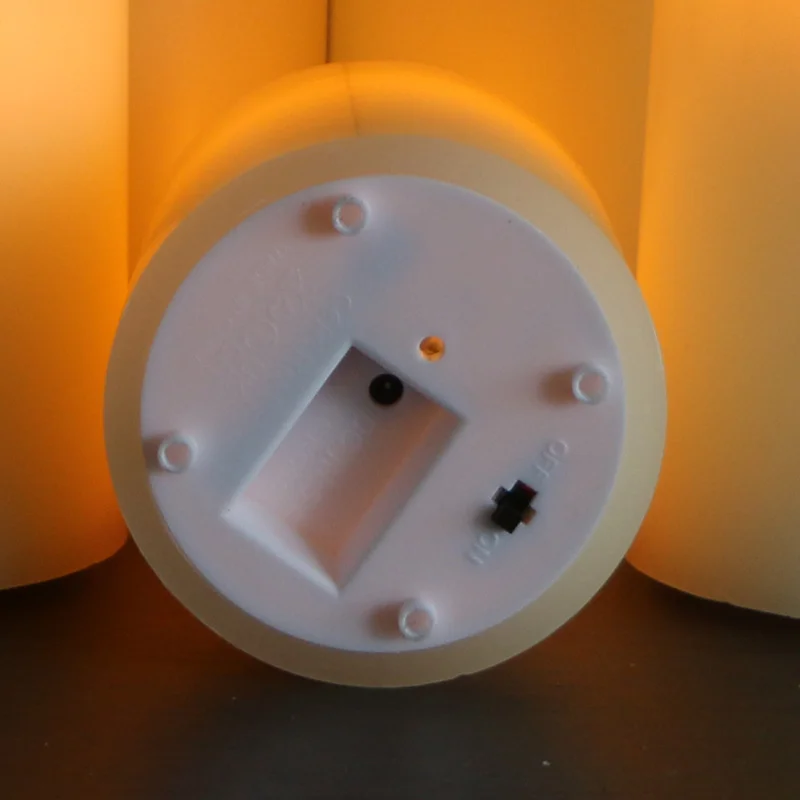
The photograph above is the whole trade in one frame: the underside of a USB rechargeable flameless candle, with a charging contact and a switch where a battery compartment would be. There is nothing to buy again and nothing to fit — and there is a charger, a bench and a rota. Whether that is a saving depends entirely on whether the bench exists.
For an operation without one, battery models keep the fix in the field. A flat battery operated LED candle in a plastic cup is working again in seconds wherever it happens to be, which is the right answer for candles distributed across venues you do not control.
Which Suits Which Operation
Occasional Events and Distributed Inventory
Battery operated models are the practical choice when events are occasional, candles go out to several venues at once, there is no dedicated charging space, and replacement cells are easy to source locally. The lower initial outlay also matters when the inventory is being built up rather than replaced.
Where the venue is outdoors or the forecast is uncertain, waterproof flameless candles with a timer keep the battery compartment sealed, which is a more common failure point than the electronics.
Frequent Events and Rental Inventory
Rechargeable models earn the higher unit price when the same stock is reused often, in quantity, from a single base with somewhere to charge. A rental company turning several hundred candles a week is buying cells constantly under the battery model; that is precisely the line the rechargeable LED candle range removes.
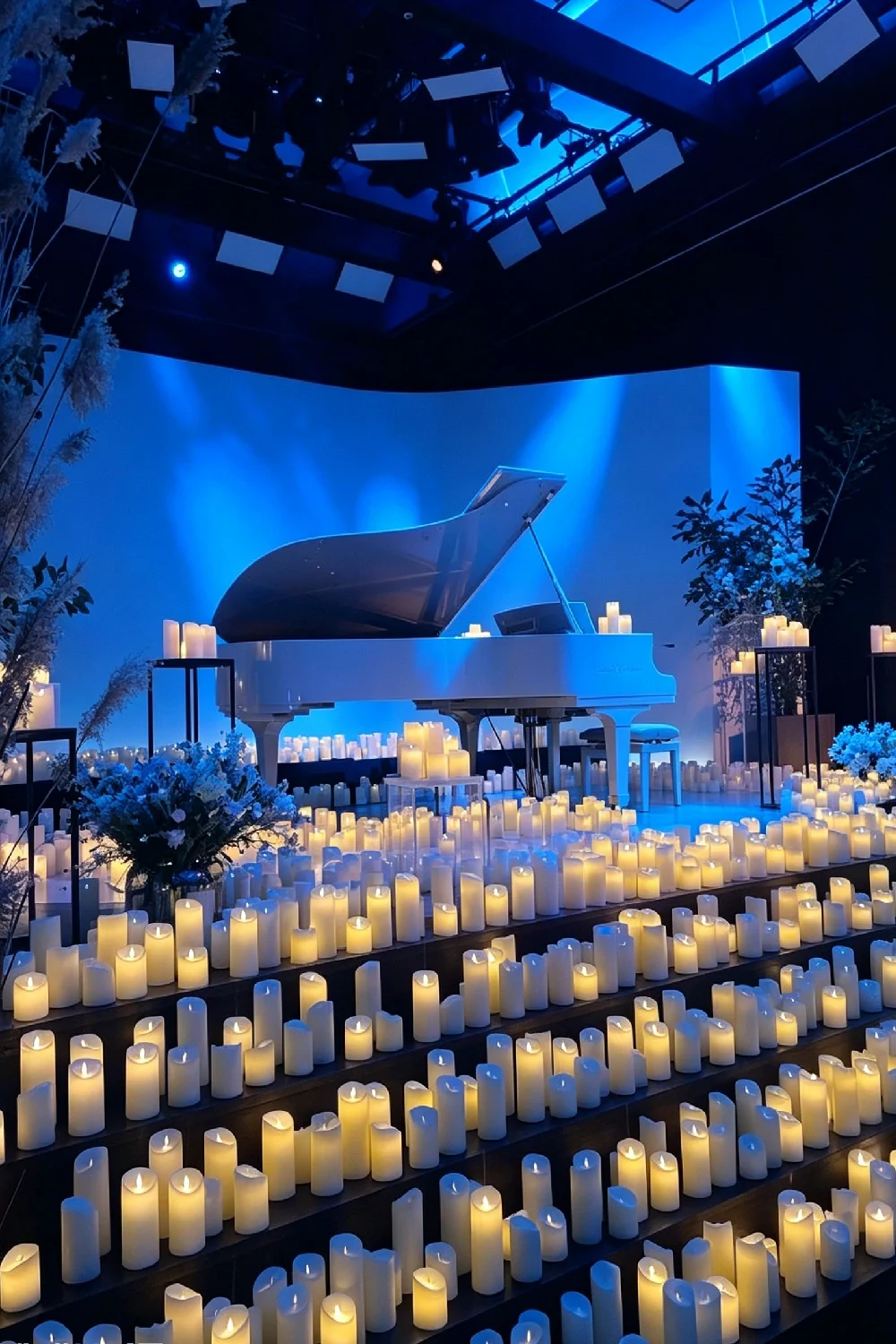
At the density above, the control system matters as much as the power system. Rechargeable remote control LED candles let one handset bring a zone up together rather than a technician working along the rows — and how remote range, timers and zoning behave at scale is worth reading before you specify either format for an installation this size.
Hotels, Restaurants and Venues
Hospitality usage is more predictable than event work, which is what makes charging routines easy to standardise: the same rooms, the same hours, the same reset every morning. That regularity is what rechargeable models are built for.
Timers matter more here than the power system does. A battery operated LED candle with a built-in timer repeats a daily cycle without anyone rostered to switch it, which is often the deciding feature in a dining room regardless of how it is powered. Battery models also stay useful for mobile setups, terraces and seasonal displays where charging access is the constraint.
Selling Both: What Wholesalers and Retailers Weigh
Reselling changes the question, because the operating cost lands on someone else. Stocking both power formats widens the range you can serve — the occasional buyer who wants the lower shelf price, and the professional operator who is buying to stop paying for cells.
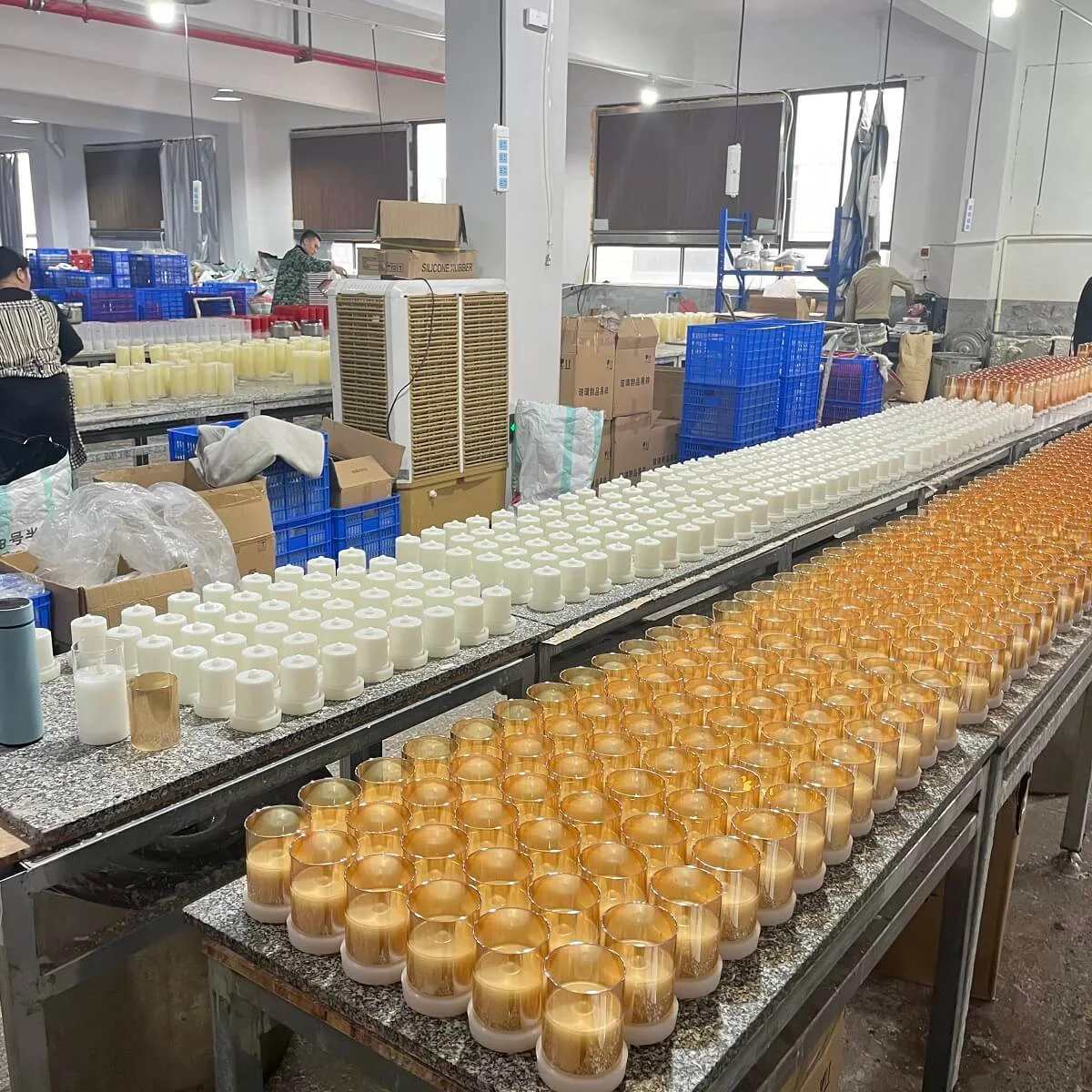
What decides a repeat order is not the first sample box but the second production run, so ask how colour, flame effect and dimensions are held consistent between runs before you ask what a unit costs. Then settle the commercial detail: whether the charging cable, tray or adapter is in the box, whether the cell is user-replaceable or sealed, and whether the packaging is retail or bulk — these are different products with different landed costs. Where no stock model fits the position you are selling into, custom and OEM production covers format and branding work.
Small formats are where the economics are starkest, because the cell is a larger share of a tea light's cost than of a pillar's. Rechargeable tea lights with a remote sit against the disposable equivalents in the LED tea light range, and traditional tea lights vs LED tea lights covers the wax comparison underneath both.
What to Confirm Before You Order
Get each of these in writing rather than from a listing, and check them on samples:
- Unit price and landed cost, both power formats.
- Expected runtime and the conditions it was measured under.
- Cell type and capacity, or rechargeable cell capacity.
- Charging time and charging method, and how many units one charger takes.
- Whether the cell is user-replaceable, and how the base is accessed once the candle is dressed into a display.
- Remote and timer functions, if the installation needs them.
- Dimensions against the holders and containers you already own.
- Flame effect and brightness consistency, judged at guest distance.
- Colour consistency across production runs, not within one box.
- MOQ, sample availability and production lead time.
- Packaging and included accessories.
- Warranty and replacement policy.
For a seasonal installation where the same questions arrive with a theme attached, remote control LED candles for Halloween decor works through them for haunted attractions. To compare formats side by side first, the full LED candle range sets out how taper, pillar and tea light models differ in practice.
Conclusion
For a supplier-screening framework that includes samples, quality control and replacement terms, see how to choose a decorative flameless LED candle supplier.
"Rechargeable is better" is not an answer, because the two formats are priced against different operating models rather than against each other. Battery operated LED candles are cheaper to buy and more flexible to deploy, and they keep costing money each time they go out. Rechargeable flameless candles cost more up front and stop costing anything afterwards, provided somebody owns the charging routine.
Work out how many times a year the same candle will be used, multiply by the quantity and the hours, and the arithmetic decides it. If the number is small, buy batteries. If it is large and you have a bench and a rota, buy chargers. If you are unsure which side of the line your operation falls on, talk to us with the quantities and the calendar and we will work it through with you.
- LED candles
- Buying guide
- Wholesale
- Event decoration
تابع القراءة

قراءة 4 دقيقة
Flickering Rechargeable Flameless Candles: Bulk Buyers' Checklist
A practical checklist for bulk buyers comparing runtime, charging, recharge cycles, flicker consistency, storage and supplier QC for rechargeable flameless candles.
قراءة 4 دقيقة
LED Tea Lights vs LED Votive Candles for Commercial Decoration
Compare LED tea lights and LED votive candles for weddings, hotels, restaurants and wholesale projects by visual scale, holder fit, runtime and cost.
قراءة 8 دقيقة
Christmas LED Candles for Events: Buying and Decoration Guide
Choose Christmas LED candles for hotels, restaurants and events by format, runtime, control and weather exposure, then confirm the right details before a bulk order.